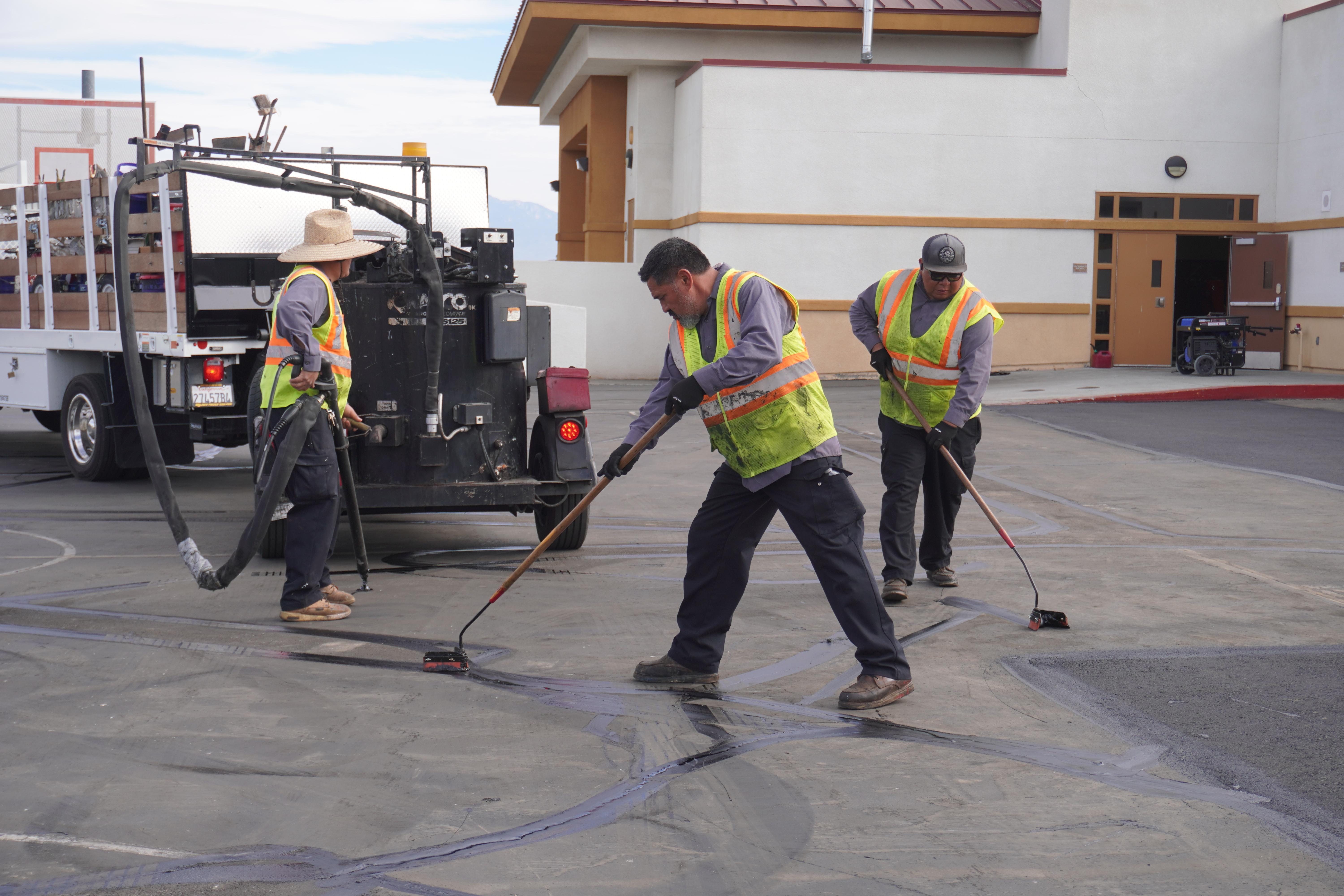
A crack that looks clean from a truck window is usually packed with sand, dust and a little moisture. Any filler poured on top of that will not stay put. With crack filling, the material matters, but the condition of the crack at the moment of application matters more.
In cracks that open and close with temperature, hot pour filler generally outlasts cold pour, because it stays flexible and bonds to the crack walls. Cold pour fits small, still cracks and short-term fixes. How long either one holds depends on the prep, how much the crack moves, the traffic over it and how the lot is maintained afterward. So treat any promise of a set number of years with caution.
What is the difference between hot pour and cold pour crack filler?
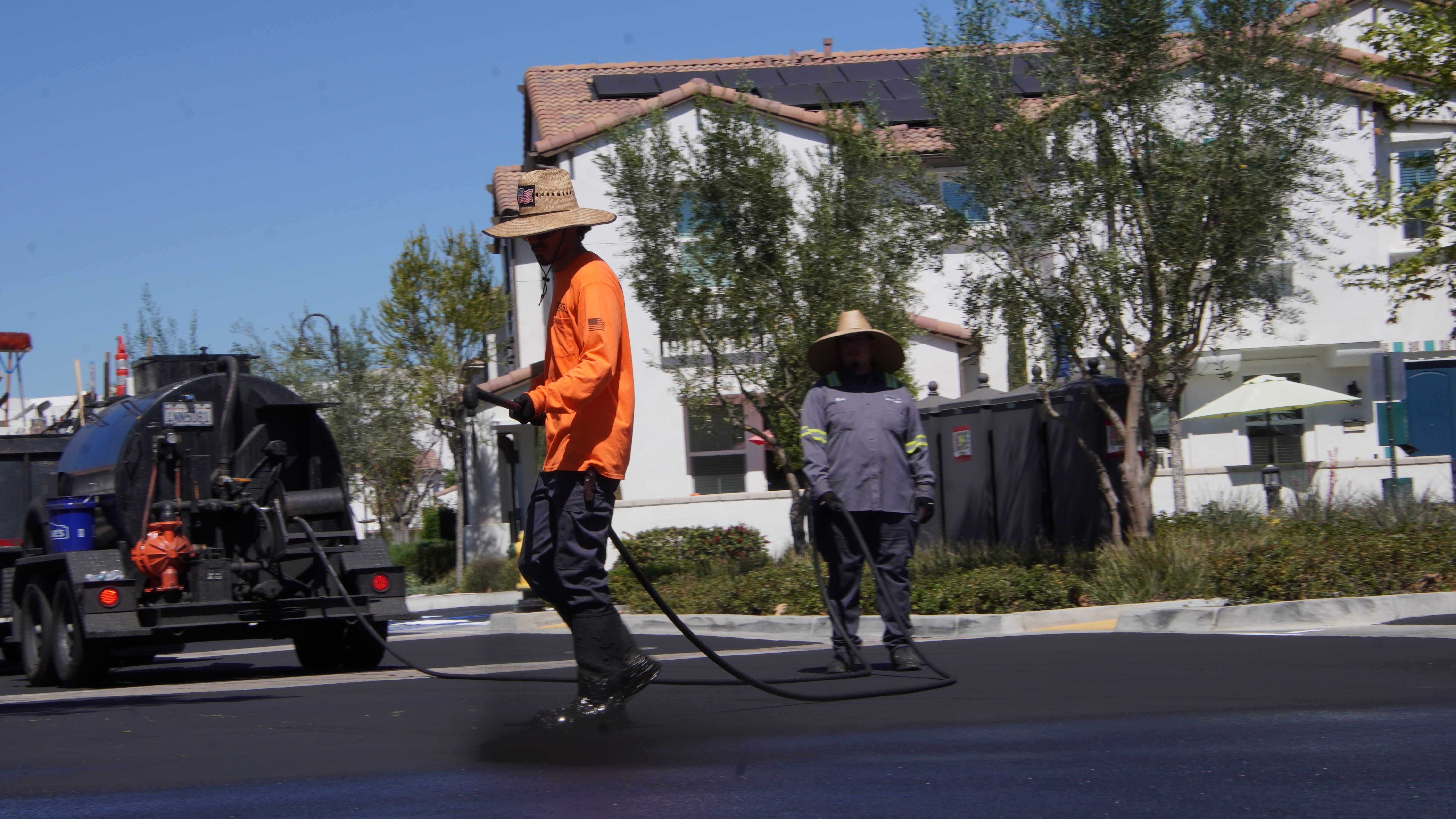
Hot pour is a rubberized, asphalt-based material heated in a kettle until it flows like thick syrup. A crew member runs it into the crack from a wand and strikes it off level with the surface. As it cools, it grips both crack walls and returns to a flexible solid.
Cold pour comes ready to use from a pail or a tube. There is no kettle and no heating, so it goes down at whatever temperature the pavement happens to be. It sets as the water or solvent in the mix leaves, which takes longer and leaves a softer, thinner plug than a cooled hot pour.
The trade also separates two jobs. Crack sealing handles working cracks, the ones that visibly widen and narrow, and often involves cutting a channel to hold the material. Crack filling handles cracks that barely move. Most parking lot work gets called crack filling either way, so ask which kind of crack your bid actually covers.
Which one lasts longer on your pavement?
Asphalt expands in afternoon heat and contracts overnight, and a crack follows that movement. The filler has to stretch with it and keep hold of the walls. Hot pour is formulated to do that. Cold pour tends to shrink as it cures and can pull away from one wall, which opens a path for water.
Hot pour
Heated in a kettle, applied with a wand, bonds to the crack walls as it cools. It stays flexible and handles cracks that move. It needs equipment and a trained crew, so it can cost more per crack foot on the first visit.
Cold pour
Applied from a pail with no heat, cures slowly and sets softer. It works for small, still cracks, quick patching and stopgaps. It often costs less up front, but repeat visits can add up, because it can wear faster under tires.
Traffic matters too, because filler sits in the wear surface and tires, turning trucks and sun all act on it. A soft cold pour plug in a drive aisle can get tracked or scuffed out well before the same crack in a low-traffic corner does. Over time the pavement can also start raveling, which means the surface stone is loosening and breaking away. That wears the crack edges down and shortens the life of any filler.
Hot pour usually lasts longer, and cold pour is a reasonable choice when the crack is small, the lot is low-traffic or you need a temporary fix. But neither material rescues a crack that was filled dirty.
How does prep decide how long the filler lasts?
Filler bonds to the sides of the crack, not the bottom, and it cannot bond to dust. In every crack we fill, the work goes in this order:
Clean the crack. Blow it out with compressed air and brush away loose edges until only solid asphalt remains.
Confirm it is dry. A damp crack steams under hot material and keeps cold pour from curing properly.
Fill from the bottom up. The material should fill the crack fully without bridging over the top in a thick bead.
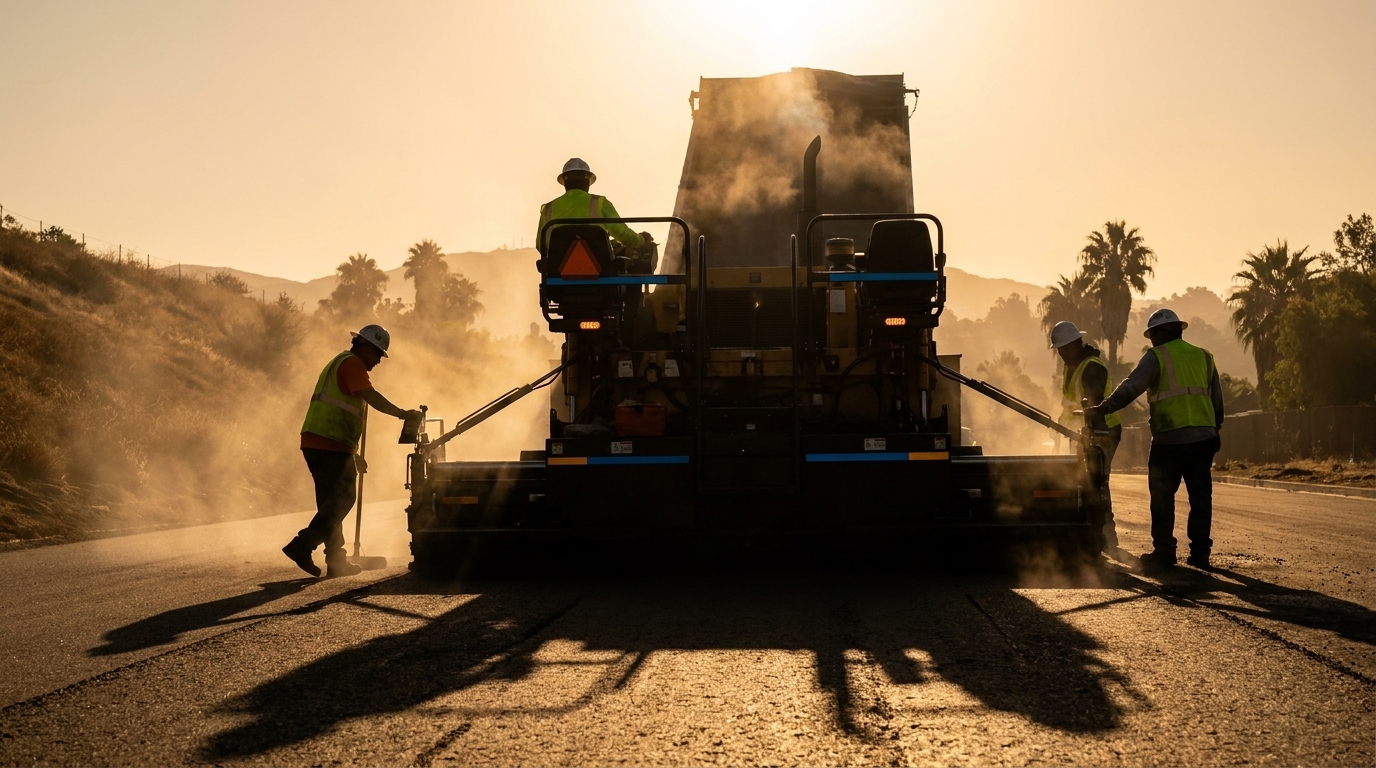
Strike it off level and keep traffic off until the material sets, so tires do not pull it out.
Skipped steps show up later. A filled crack that reopens in a few months almost always traces back to step one or two, not to which product went in.
Which cracks should not be filled at all?
Filler works on single linear cracks and cracks along joints. It does not work on alligator cracking, a web of interconnected cracks that looks like reptile skin. That pattern points to a failing base under the surface, and no filler, hot or cold, repairs a base. The pavement keeps flexing, and the filler pops out.
Why should you fill cracks before the rainy season?
Water is what turns a hairline crack into a pothole. It slips through the crack, softens the base underneath and lets tires break out the surface. Southern California gets most of its rain in winter, so filling cracks in the dry weeks before the first storms keeps that water out of the base. A repair that has fully set before it rains also holds better than one that gets wet while still curing.
Cracks should be filled before sealcoating, never after. Sealcoat is a protective layer that slows oxidation and water penetration. It is preventive, not a structural repair, and it does not close a crack on its own. Our guide on how often to sealcoat a commercial parking lot covers the cycle. Our sealcoating and crack filling service then pairs the two steps in the right order. For lots across Riverside and the surrounding Inland Empire, that usually means a fall schedule.
If a crack has already become a pothole, a raised edge or a trip hazard, that is no longer a maintenance item. It is a safety problem, and our 24/7 emergency asphalt repair covers it with a dedicated emergency contact.
How we approach crack filling at NPG Asphalt
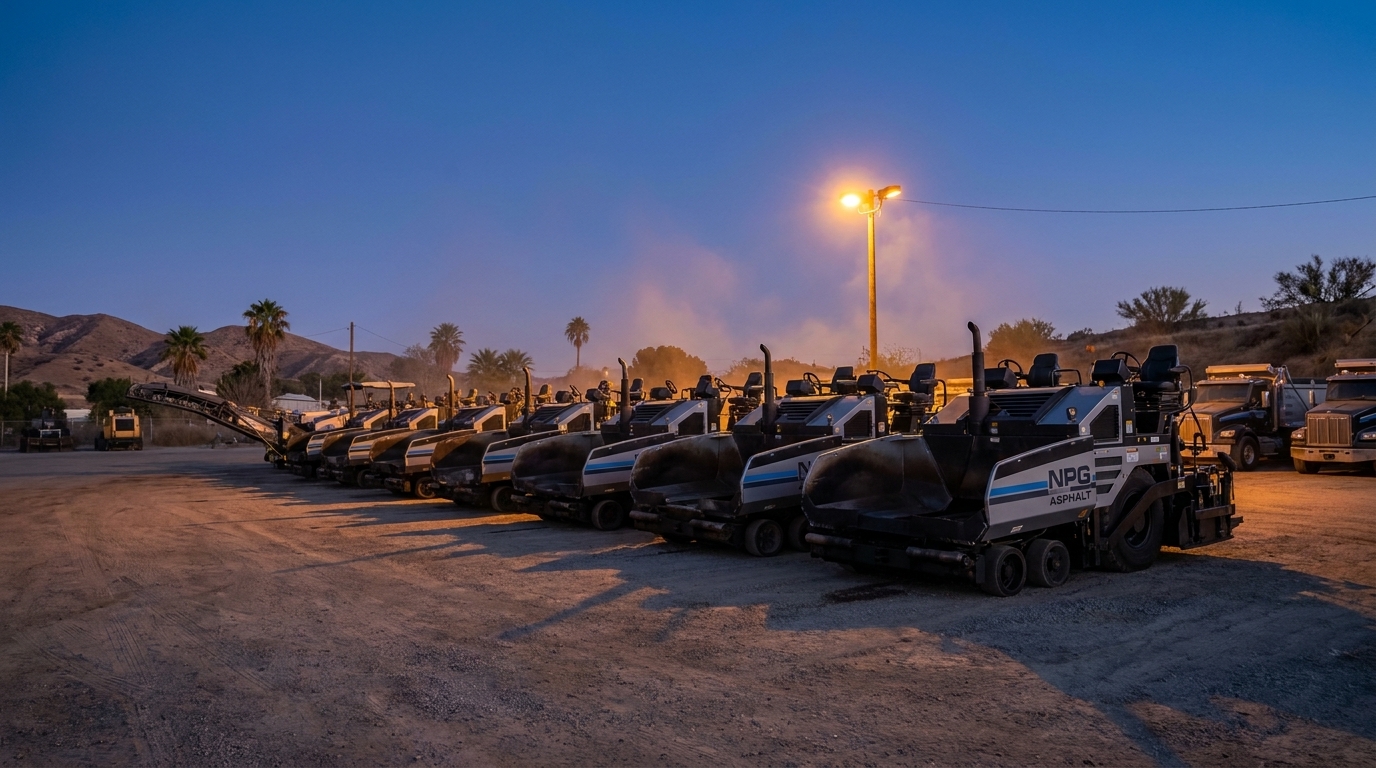
At NPG Asphalt, we have been family owned and operated since 1961. When you ask about your lot, you can expect clear answers on which cracks get filled, which are past filling and what each step involves. In client reviews, some mention that our representatives explain pricing, scope and process upfront, so there are no surprises. We also hold to the same prep sequence above on every lot.
Get a free quote before the rains start
Walk your lot now and photograph the cracks, noting which ones you have seen widen and which sit in drive aisles. Bring those photos and any past repair records, and we can tell you which areas call for filling, which need replacement and which can wait.
When you are ready, get a free quote and you will talk with our team about your specific cracks, then leave with a free estimate in hand. Licensed and insured since 1961, with three state licenses: LIC# 664779, ROC 350942, ROC 350826.