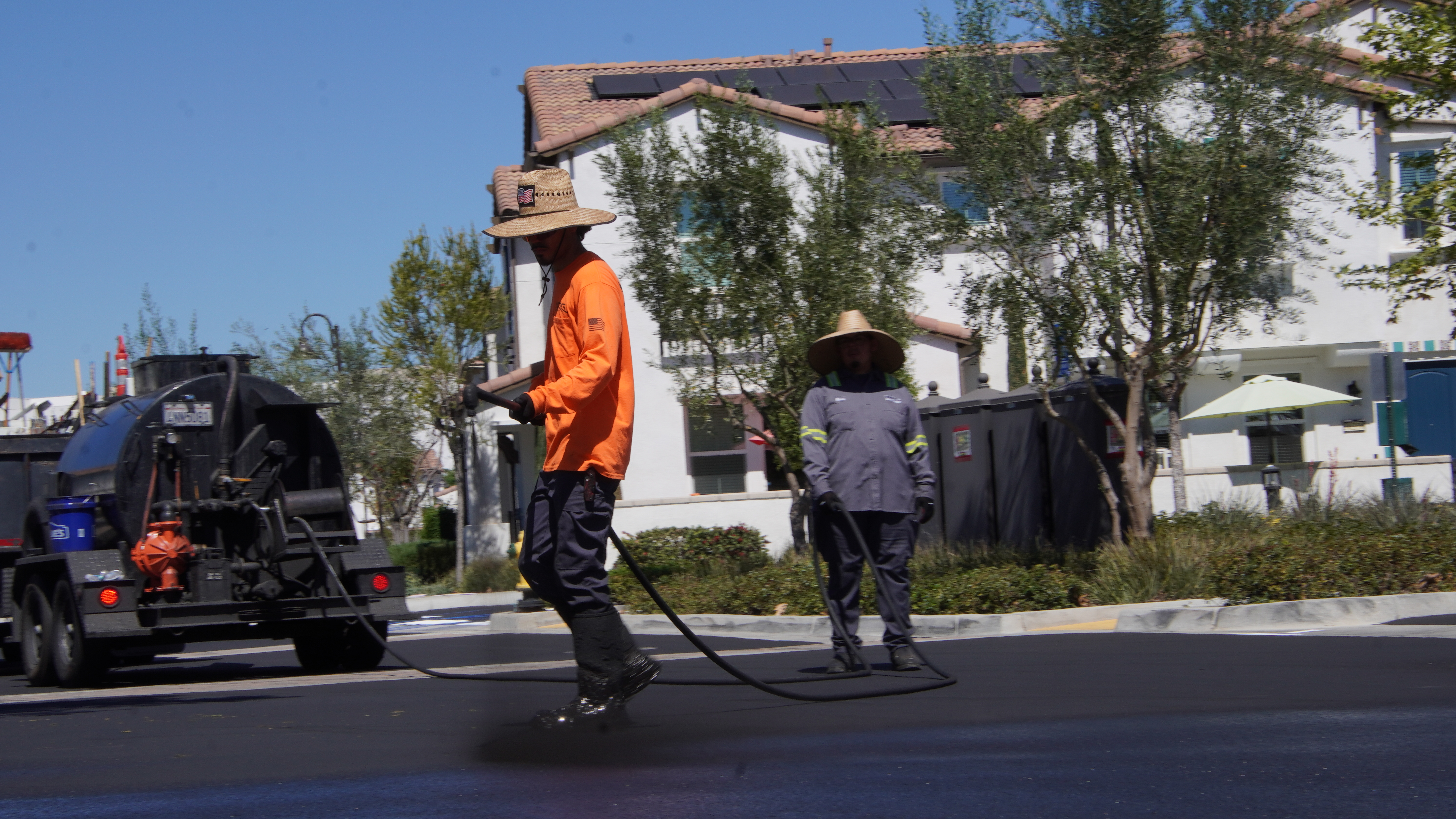
Parking lots in Southern California, the standard recommendation is every two to three years, though that range compresses or stretches depending on traffic load, sun exposure, the condition of the existing surface, and whether crack filling was kept current between cycles. A lot servicing daily delivery trucks ages differently than a low-traffic professional office complex, even if both sit under the same Inland Empire sun.
Getting that interval right is less about following a calendar and more about reading the pavement. What follows covers how sealcoating actually works, what accelerates wear in this region, and how to set a schedule that holds up over time.
What Sealcoating Does and What It Does Not Do
Sealer is a surface treatment. It bonds to the top layer of asphalt, filling the fine pores in the mix and forming a barrier against UV oxidation, motor oil, gasoline, and water intrusion. A properly applied coat slows the rate at which the binder in asphalt breaks down, which is what causes fading, raveling (the surface aggregate loosening and scattering), and eventually cracking.
What sealer cannot do is correct structural problems. Alligator cracking, the interconnected, web-like pattern that signals base failure beneath the surface, will not be resolved by sealcoating. Applying sealer over a compromised base only hides the problem temporarily. Before any sealcoat application, surface cracks should be cleaned out and filled; otherwise, water finds the same pathways after the sealer wears through. Our sealcoat and crack filling service addresses both steps in sequence for exactly this reason.
Why Southern California Accelerates the Clock
Asphalt oxidizes faster under sustained UV exposure. In most northern climates, a sealcoating cycle closer to three years is reasonable. In the Inland Empire, Perris, Murrieta, and the broader SoCal corridor, the combination of intense sun from April through October, ground temperatures that regularly push well above ambient air temperature on dark pavement, and dry conditions that crack exposed binder faster than humid regions means the two-year end of that range is more realistic for high-traffic commercial lots.
Surface temperature matters more than most property managers expect. Asphalt on an exposed Southern California lot can reach 150°F or higher on a summer afternoon. At those temperatures, the oils that keep asphalt flexible migrate toward the surface and eventually evaporate, leaving a brittle matrix. Once the top layer becomes brittle, traffic stress creates surface cracking even without any base movement. Sealer slows that process by reducing direct solar absorption and sealing the surface against the initial stages of oil migration.
The dry climate also means freeze-thaw cycles, which do significant pavement damage in wetter, colder regions, are rarely a factor here. That is one variable working in your favor. The counterweight is that SoCal lots get no natural rinsing of oil deposits between applications the way rain-heavy climates do, so petroleum contamination from vehicle drips accumulates and softens asphalt in high-traffic lanes if sealcoating is deferred too long.
How Traffic Load Shifts the Schedule
A retail strip center with continuous vehicle circulation, delivery trucks pulling through, and full occupancy most days is not on the same maintenance clock as a medical office lot that empties by 6 p.m. Traffic load affects sealcoating frequency in two ways: mechanical abrasion wears sealer thinner faster, and heavier vehicles concentrate stress on the surface in ways that accelerate surface cracking even before structural damage develops.
For heavy-use commercial lots, distribution centers, grocery anchors, drive-through queues, a two-year cycle is often the right call. Applying sealer more frequently than needed is a real cost, but letting surface degradation get ahead of scheduled maintenance costs more: at the point where raveling or surface cracking is visible, crack filling alone may not be enough, and the work steps up to overlay or, in cases of base failure, asphalt removal and replacement.
Lower-traffic lots with good original base construction can often run a three-year cycle without meaningful penalty, provided crack filling is done on schedule and the sealer coat is applied at the right thickness, not thinned down to save material on large square footages.
New Pavement: The First Application Matters
Freshly poured asphalt should cure before the first sealcoat goes down. The standard guidance is a minimum of 90 days for new construction, though some mixes or high-oil-content projects benefit from waiting closer to six months. Applying sealer too early traps residual oils in the mix and can prevent the binder from fully curing, which undermines the surface integrity you are trying to protect.
When the lot is ready, that first application sets the baseline. Two coats go down in sequence: the first fills the larger surface pores and provides adhesion; the second builds the protective film thickness. From that point, the maintenance cycle begins, and the condition of the surface at each subsequent application determines whether you are maintaining a healthy lot or playing catch-up.
If your property's pavement was installed as part of a new construction build, a warehouse campus, a retail pad, a multi-tenant commercial development, the asphalt paving for new construction process should include a documented timeline for the first sealcoat application so the maintenance schedule starts correctly from day one.
Reading the Surface: Signs You Are Overdue
Color is the most visible indicator. Fresh sealer gives asphalt a deep, consistent black. As sealer wears, the surface fades to gray, then to a mottled gray-brown as the aggregate below starts showing through. Fading alone is not a structural problem, but it signals that the protective layer is thinning. At that stage, surface pores are open and UV, water, and oil are reaching the binder directly.
Raveling, aggregate particles loosening from the surface and collecting along curbs or in catch basins, is the next stage. It means the binder at the surface has already degraded enough to release its hold on the stone. At this point, sealcoating is still effective if the surface has not cracked, but crack filling should be part of the same scope of work.
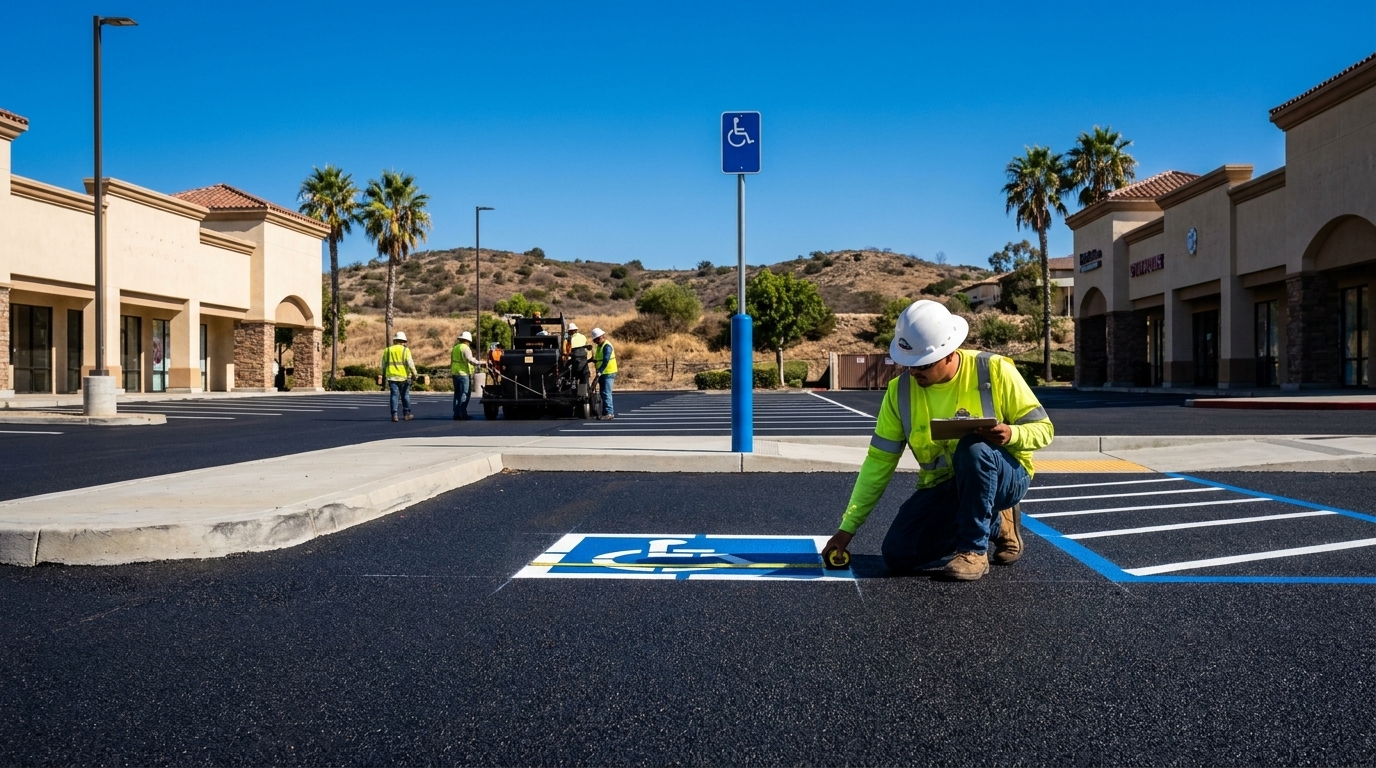
Striping condition is also a reliable proxy for sealer wear. Paint adheres better to sealed surfaces and holds color longer. When lot striping starts fading faster than expected between repaints, it often reflects sealer wear beneath the paint rather than a paint-quality issue. Keeping striping current is not just about appearance: in California, faded ADA markings and stall delineation carry compliance exposure. Our striping and signage service is typically scheduled in the same project window as sealcoating to minimize tenant disruption and keep the lot code-compliant in a single mobilization. You can also review the California parking lot striping requirements our team has outlined for commercial owners.
Building a Maintenance Schedule That Holds
The most effective approach is not a rigid calendar but a documented cycle tied to observed surface condition, traffic patterns, and project history. A lot that receives a proper sealcoat application, surface cleaned, cracks filled, two coats applied at correct coverage rates, adequate cure time before traffic, will hold up longer between applications than one where any of those steps was skipped or abbreviated.
Property managers overseeing multiple sites in the Riverside County and San Diego County corridors often find that coordinating sealcoating across a portfolio, staggering applications so no two adjacent properties are closed simultaneously, reduces both per-project cost and tenant disruption. That kind of scheduling works when the maintenance intervals are documented and the surface condition at each site is assessed consistently.
If you are building or inheriting a maintenance plan for a commercial lot in the region, the frequently asked questions on our site cover common questions about project timing, curing windows, and what to expect during the sealcoating process. For a site-specific assessment, request a quote and we will evaluate the current surface condition before recommending a scope of work. NPG Asphalt is licensed and bonded, CA Contractors License on file, and has been maintaining commercial pavement across Southern California since 1961.