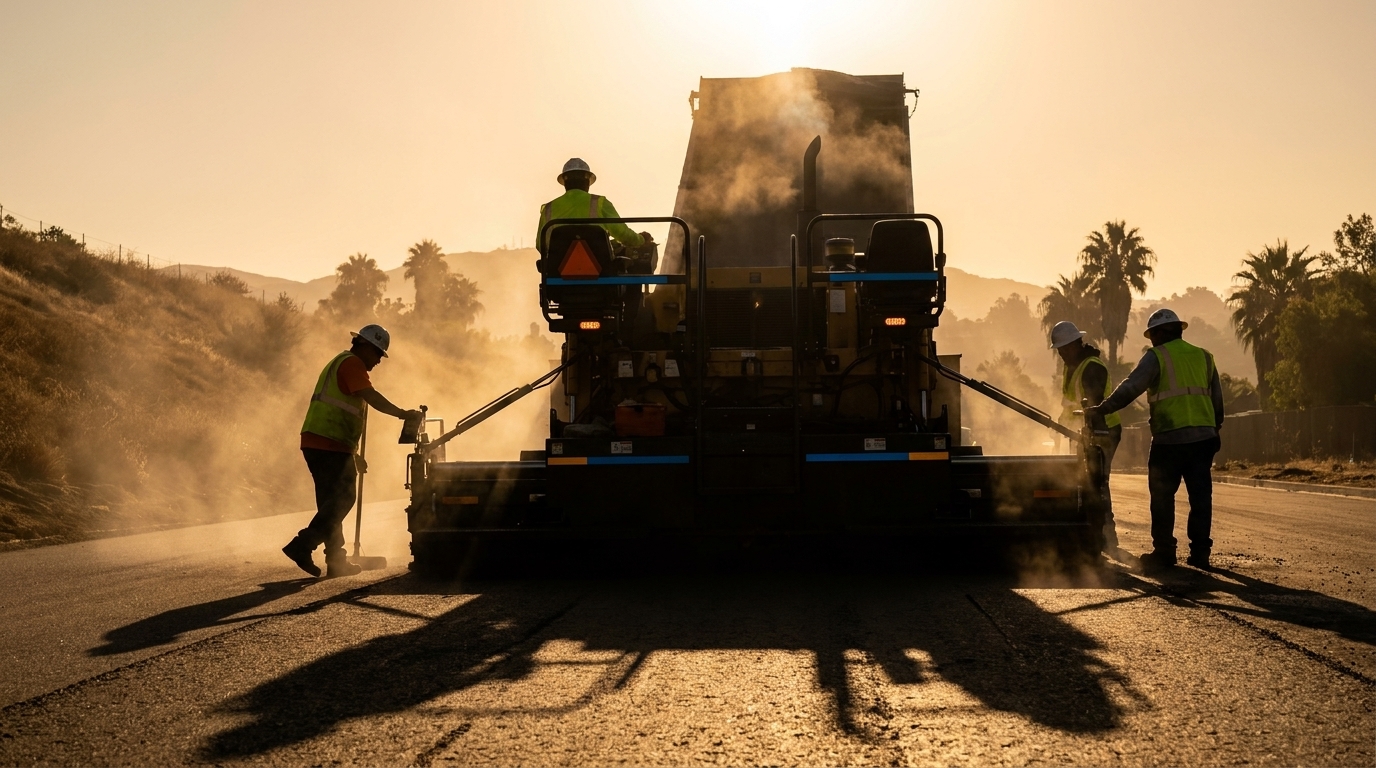
Your parking lot is the first thing customers, tenants, and inspectors see when they arrive. Faded lines, missing accessible stall markings, or an incorrectly signed van-accessible space are not cosmetic problems. In California, they are compliance failures that can trigger ADA complaints, city citations, and civil liability. If your property is commercial, the bar is higher than most owners expect.
California enforces two overlapping frameworks: the federal Americans with Disabilities Act and the California Building Code (Title 24). Title 24 is stricter than federal ADA minimums in several areas, which means a lot that passes federal inspection can still fail a California building department review. Getting striping right from the start costs far less than remediation after a complaint.
Since 1961, NPG Asphalt has striped parking lots across San Diego County for commercial property owners, HOAs, and municipalities. This guide pulls together the requirements we work with on every job so you can walk your lot with a clear picture of what the code actually demands.
How California's Rules Differ From Federal ADA Standards
Federal ADA standards set a floor. California Title 24 often raises it. The most visible difference is stall count: California requires one accessible space for every 25 spaces in a lot up to 40 total spaces, while federal guidelines allow a slightly different ratio at lower counts. For larger lots the numbers converge, but California-specific signage, color, and marking requirements add details that federal rules leave open.
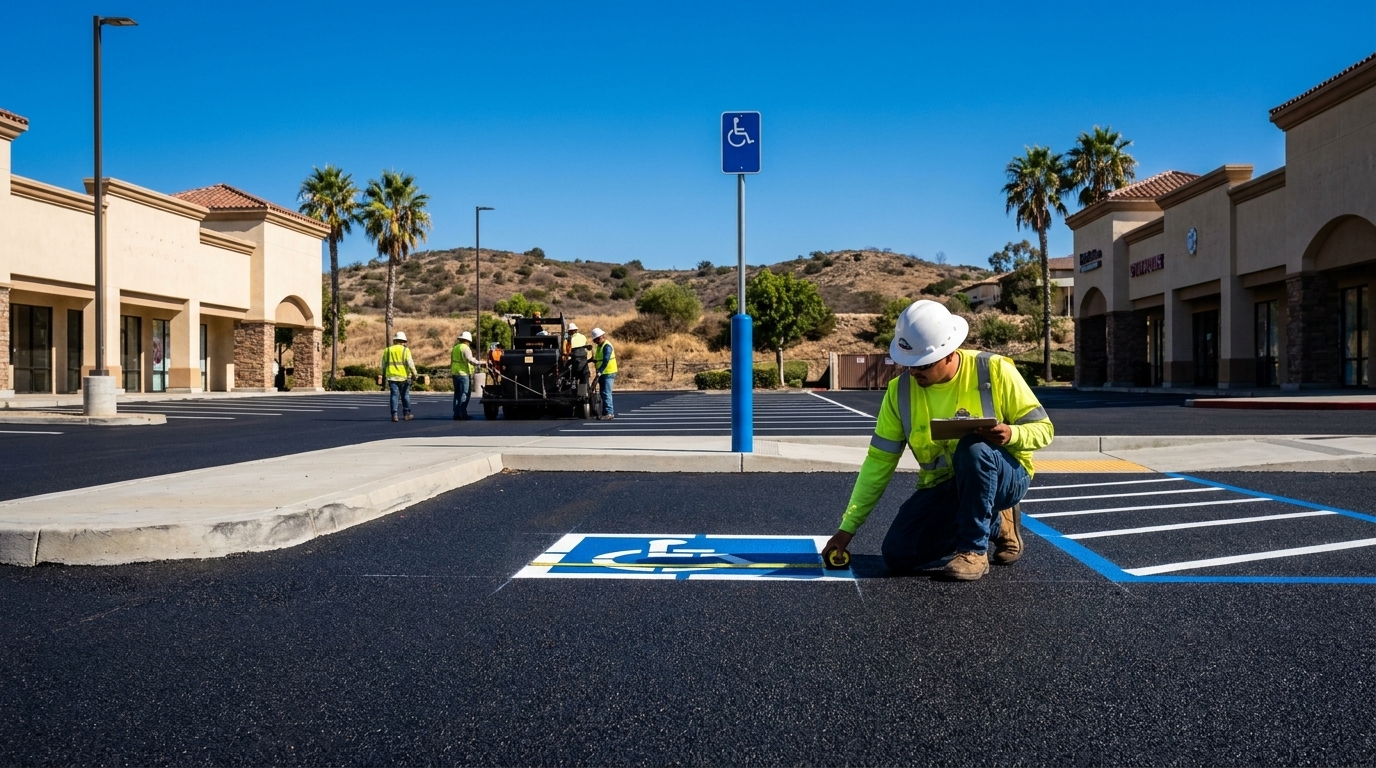
California also mandates that accessible stall markings use a specific shade of blue paint for the international symbol of accessibility (ISA) painted on the stall surface, not just posted on a sign. Federal ADA does not specify a surface color. California also requires the words "NO PARKING" in white letters within the access aisle itself, a step that many out-of-state striping crews miss entirely. These are exactly the kinds of details that show up in a city inspector's report.
Stall Dimensions, Counts, and Access Aisles
Standard parking stalls in California commercial lots must be at least 8.5 feet wide and 18 feet deep, though many municipalities require 9 feet wide as a condition of permit approval. When in doubt, check your local planning department, since city standards can exceed the state minimum. Compact-only designations are restricted to specific zones, and those stalls must be clearly signed or they default to full-size requirements.
Accessible stalls require more room. A standard accessible space must be at least 9 feet wide, with a 5-foot access aisle on one side. Van-accessible spaces must be 9 feet wide with an 8-foot access aisle, or alternatively 17 feet wide with a 5-foot aisle. At least one van-accessible space is required per lot. The access aisle must be marked with diagonal stripes and the "NO PARKING" text described above, and it must connect to an accessible route leading to the building entrance without requiring a person to cross vehicle traffic lanes.
For a full breakdown of accessible space counts and signage specifications, our ADA parking lot compliance checklist for San Diego business owners covers the stall count tables and sign mounting heights in detail.
Standard Accessible Stall
Minimum 9 ft wide, 5-ft marked access aisle on one side. Required ISA symbol on pavement in blue. Signage at 80-inch minimum height. Suitable for most accessible spaces in the lot.
Van-Accessible Stall
Minimum 9 ft wide with 8-ft access aisle, or 17 ft combined width with 5-ft aisle. "Van Accessible" supplemental sign required below ISA sign. At least one required per lot regardless of lot size.
Paint Specifications and Marking Standards
Line color and retroreflectivity matter in California. Standard stall lines are typically white. Fire lanes require red curb paint with white lettering. Accessible stalls use white stall lines with a blue ISA symbol on the stall surface. The ISA must meet minimum size requirements, typically 36 inches tall for the figure, scaled to the stall. The wrong color or an undersized symbol are both citable violations.
Paint type matters too, especially in high-traffic commercial lots. Thermoplastic striping holds up far longer than standard traffic paint under repeated tire wear and San Diego's sun exposure. It is the right choice for drive aisles, fire lanes, and accessible markings that cannot be allowed to fade. Traffic paint works well for routine re-striping cycles where the surface is in good condition and reapplication happens on a regular schedule. Whichever material you use, lines need to be crisp and fully opaque. A faded line is a non-compliant line from a code standpoint.
Signage Requirements That Striping Alone Cannot Satisfy
Painted markings and posted signs work together. California requires each accessible space to have a sign displaying the ISA posted at a height so the bottom of the sign is no lower than 80 inches above the finish grade of the stall. The sign must be visible from the driver's seat when the stall is occupied, so placement and post height matter, not just the sign content. Van-accessible stalls require a supplemental "Van Accessible" sign below the ISA sign.
Tow-away language is also required. California Vehicle Code Section 22511.8 mandates that each accessible space sign include a statement that unauthorized vehicles will be towed at the owner's expense, along with a phone number for the tow company or local traffic enforcement. That specific language must appear on the sign itself, not just on a nearby lot entrance sign. Many older lots have accessible signage that predates this requirement and are out of compliance simply because the sign text is incomplete.
Beyond accessible stalls, fire lane signs and curb markings must align with local fire code requirements, which in San Diego are enforced by the San Diego Fire-Rescue Department and can vary by occupancy type. Loading zones, reserved stalls, and directional signage each carry their own standards. Our striping and signage service includes a review of existing signage as part of every project scope so nothing gets overlooked.
When Re-Striping Alone Is Not Enough
Striping on a deteriorated surface does not fix the surface. Alligator cracking (the web-like pattern that signals base failure beneath the asphalt) means the pavement is moving. Lines painted over it will crack and separate with the pavement. If your lot has significant alligator cracking, potholes, or surface raveling (where aggregate is separating from the binder and the surface feels loose and rough), re-striping is the last step in the repair sequence, not the first.
The typical order of work on a deteriorated commercial lot is crack filling, surface repairs, sealcoating if the surface is otherwise sound, and then striping. Skipping steps to save money upfront typically means re-doing the work sooner. Our sealcoat and crack filling service is regularly paired with striping projects so the finished lot is both protected and properly marked in a single mobilization. For lots with deeper structural problems, asphalt removal and replacement may be necessary before any surface treatment makes sense.
A freshly striped lot on a failing surface is still a failing lot. The lines just make it look like someone tried.
What to Expect From a Compliant Re-Striping Project
A well-run striping project starts with a layout review, not a paint gun. Before any lines go down, the crew should confirm stall dimensions, accessible space count against current lot totals, access aisle placement, and fire lane routes. On lots being re-striped rather than laid out from scratch, existing lines are used as a reference, but the crew checks them against current code requirements because layouts from ten or fifteen years ago often do not meet today's standards.
Preparation work includes cleaning the surface thoroughly, since paint adhesion fails on dusty or oily pavement. If old lines are being shifted or removed, the previous markings need to be blacked out before new ones go down, or the old ghost lines will confuse drivers and show up in inspection photos. Traffic control is planned before the job starts, not worked out on the day, especially for occupied commercial lots where businesses need to stay open during the work.
- Confirm current accessible stall count meets California requirements for your total stall count.
- Verify van-accessible stall dimensions and access aisle width before painting.
- Check that all accessible signage meets 80-inch height minimum and includes required tow-away language.
- Confirm fire lane curb paint color and lettering are present and legible.
- Surface clean and any crack filling complete before striping begins.
- Black out any obsolete lines that conflict with the new layout.
California's striping rules have real teeth, and enforcement is not limited to government inspectors. Any individual who encounters a non-compliant accessible space can file a complaint, and serial plaintiffs have made ADA litigation a serious exposure for commercial property owners who let maintenance slide. Keeping your lot properly striped and signed protects the people using your property and limits your legal risk.
NPG Asphalt has been licensed and bonded since 1961. Our estimators have walked hundreds of commercial lots across San Diego County, and when you call for a striping estimate you get a crew that knows what a California building inspector looks for, not just what looks good from the street. CA Contractors License on file. Call us before the lines fade further.